Table Of Content
Applying these practices consistently can help improve the quality, maintainability and testability of your codebase. Additionally, exploring other practices like continuous integration, code coverage analysis and test refactoring can further enhance your TDD workflow. This module provides an overview of how to use Behave to generate Python steps. Once you know how to generate the steps, you will learn the workflow for implementing them.
Applying Test-Driven Development in the Cloud - InfoQ.com
Applying Test-Driven Development in the Cloud.
Posted: Thu, 25 May 2023 07:00:00 GMT [source]
InfoQ Software Architects' Newsletter
We review these steps to be sure that we have no gaps relative to the original requirements - no more and no less - from a business perspective without going deeply into implementation details. There are a few situations when unit tests are better than TDD. If new code fails some tests, the programmer can undo or revert rather than debug excessively.
TDD in practice
2024: The Year of Testing - DevOps.com
2024: The Year of Testing.
Posted: Wed, 06 Dec 2023 08:00:00 GMT [source]
To a surprise, TDD coders had finished and produced more reliable code than the developers who wrote unit tests. Unit testing has been there since the inception of programming. However, the methods of unit testing have evolved over the years. TDD is about writing the test code before writing the production code. In Agile development, TDD ensures that the code is working as intended and that new modifications to the base code do not break existing functionality. It is also used to improve the quality of the codebase and to reduce the overall cost of software development.
Challenges Faced and Benefits Gained from Practicing TDD
Overall, TDD offers a more efficient and reliable approach to software development, ensuring that code is thoroughly tested before being integrated into the system. Traditional testing, however, may be more appropriate for larger and more complex projects where a more comprehensive approach to testing is required. A development approach where tests are written before the actual code. Developers write tests, then implement code to pass those tests.
However, this approach still proved costly and time-consuming, even in an age where code can be written, changed, and built very quickly. Classic TDD (also known as Inside Out or Chicago style TDD) is a style of unit testing where we start from the unit tests, and build outwards, fleshing out the internal details of the objects we know we need. This is probably the most straightforward and commonly known form of TDD. I didn't start writing tests until later in my career. When I first started out, I knew that we should probably have them, but as for writing them?
We’d love to talk with you about your next great software project. Fill out this form and we’ll get back to you within two business days. As designers, I think we all probably have had these thoughts from time to time.
You will explore BDD, including its benefits for higher-level automated testing and its typical workflow. You will discover the basics of Gherkin syntax, a standard syntax for writing BDD specifications. You will learn about popular BDD tools and how to select the best one for your project. This module also covers essential methods for performing BDD with Behave.
Navigating Through Modern Software Testing Complexities
Writing and maintaining an excessive number of tests costs time. Also, more-flexible modules (with limited tests) might accept new requirements without the need for changing the tests. For those reasons, testing for only extreme conditions, or a small sample of data, can be easier to adjust than a set of highly detailed tests.
Historical data of your previous developments help setting the best set of test design techniques to reach a cost optimum and high quality together. In lack of historical data some assumptions can be made, which should be refined for subsequent projects. ” Maybe your users point out a few minor things, or express an opinion about the shade of green that you used, but they don’t have a lot of trouble with the application. ” moments, everything works as expected, and the users are generally happy.
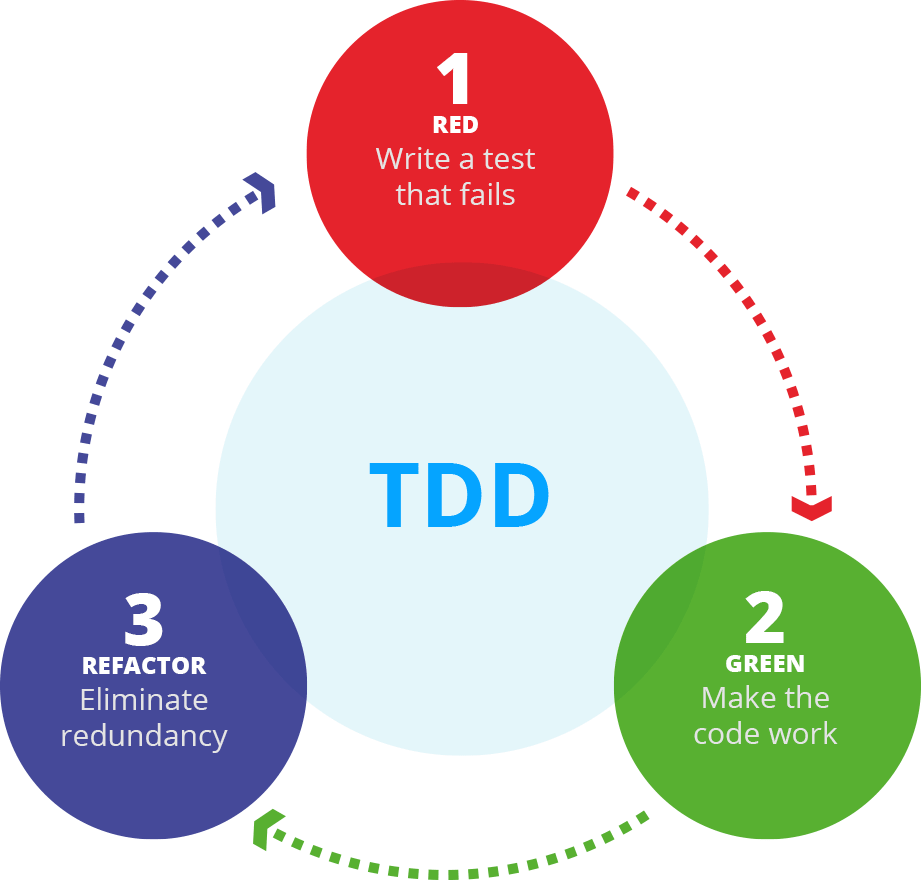
It’s that following the practice of TDD necessarily shapes the way the developer thinks about designing and building their application. This article describes the TDD approach in detail, along with its stages, examples, and benefits in software development. The evolution of Agile development has introduced many pragmatic practices for delivering quality software at high speed. Test-Driven Development (TDD) is a practice now recognized as an efficient approach that drives positive results. Regression testing is a separate step and may require additional effort to ensure that new changes don't break existing functionality. Built-in regression testing as tests are run frequently.
In Extreme Programming, tests are a mandatory part of planning and feedback loops. We're not sure if there are edge cases we're missing, if there are structural problems with the way we've written our code, and if we're even going to be able to test the thing. This is true for much of the other test types as well (unit, acceptance, E2E, contract, etc). This is especially important later on in a project when the codebase is much larger than it was at the beginning, and there's way more code that one human being can mentally account for anymore.
It was listed alongside Scrum and XP when in fact TDD is a practice that can used within these methodologies. Likewise, results from other studies during this period must be analysed in the context of how TDD was defined or interpreted. Kent Beck codes the first version of SUnit test framework for Smalltalk.
For example, in traditional code-first unit testing, a test might consist of testing all decisions in a coding construct. This is the opposite of the more commonly applied approach, as described above. In the “code, text, fix” approach, the developer often performs tests, but the thing to observe is that the code is written first, then the unit or component tests are performed based on the code.
TDD is complicated, with many different interpretations over what it means to do it properly and how to use it to get the biggest benefits for your code. Some developers swear by TDD, saying it gives them the confidence to take coding risks. At this point, we have finished our piece of art (implementation). With TDD in mind, we have needed minimal code changes to pass all the test cases and satisfy all requirements with refactoring, ensuring that we have great code quality (performance, readability, and design). We have an opportunity to refactor here but we will not take it in this step. In the implementation phase, our only goal is to make the test pass and give us a green bar.
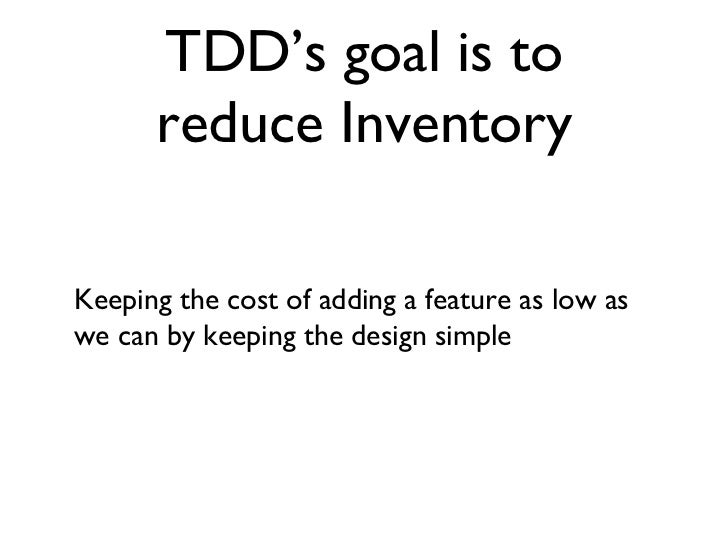
Below we will explore a few test strategies that would help us widen our scope beyond TDD. In comparison to TDD, which drives entire application development, unit testing only tests functions, classes, and procedures. Using Test Driven Development in your software development process has many advantages. Traditional techniques focus on first the code, and then test cases are executed.




No comments:
Post a Comment